The Blueprint is a gallery installation that highlights the creativity and impact of Black innovators whose ideas have shaped everyday life. Through images and contextual information, visitors are invited to explore inventions and innovations across disciplines, encouraging curiosity, learning, and a deeper understanding of how these contributions continue to influence the world around us.
VISIT OUR GALLERY
THE KIMBELL 607 N MAIN STREET, BRYAN, TX
FEBRUARY 6 - FEBRUARY 28 | MONDAY - FRIDAY 8AM-5PM

Join us on First Friday for a live dance performance presented during The Blueprint exhibition.
Household, Home & Daily Life

Sarah Boone (1832–1904)
New Haven, Connecticut
- Sarah Boone, the first Black woman in Connecticut to secure a US patent (and one of the earliest Black women from anywhere in the US), to improve the ironing of women’s clothing, including a narrow, padded,and curved board designed to press sleeves.

Alice H. Parker (1895–1920)
Morristown, New Jersey
- Alice H. Parker, whose lineage and education remain contested, developed a method of heat exchange using natural gas that could be directed throughout an entire house.

Marie van Brittan Brown (1922–1999)
Jamaica, Queens, New York
- Marie van Brittan Brown, a nurse who worked long, late hours, worked with her husband Albert Brown to develop a CCTV home security system that incorporated two-way microphones, a sliding camera, and television monitors.

Alexander Miles (1838–1918)
Duluth, Minnesota; Montgomery, Alabama
- Alexander Miles, a successful barber, developed an improved design for automatic elevator doors that could open (and, importantly, close) on each floor.
Health, Medicine & Safety

Joseph Winters (1816–1916)
Chambersburg, Pennsylvania
- Joseph Winters, an abolitionist and railworker who was active on the Underground Railroad, innovated improvements to the wagon mounted fire ladder, as well as developed a fire escape that could be mounted to building walls.

Garrett Morgan (1877–1963)
Cincinnati, Ohio
- Garrett Morgan, a talented inventor responsible for improving many technologies, developed three-way traffic signal with warning lights to instruct drivers to slow down.

Dr. Charles Drew
(1904–1950)
New York City & Washington, DC
- Dr. Chares Drew, an innovator in the field of blood preservation, particularly blood transfusions and large-scale blood banks, also holds two patents for surgical tools as a co-inventor.

Dr. Patricia E. Bath
(1942–2019)
New York City & Los Angeles, California
Dr. Patricia E. Bath, who was the first woman to chair an ophthalmology residency program in the United States, developed laserphaco, which was a new device and technique that completed all steps to remove cataracts from the eyes.
Transportation, Engineering & Industry

Norbert Rillieux (1806–1894)
New Orleans, Louisiana & Paris, France
- Norbert Rillieux, an early chemical engineer trained in France, developed the multistage evaporator that has become the basis for all industrial evaporation.

Elijah McCoy (1844–1929)
Upper Canada & Ypsilanti, Michigan
Elijah McCoy, who studied mechanical engineering at the University of Edinburgh, developed several innovations having to do with lubrication for machinery, including engines, continually improving upon his own patent from the time it was first filed in 1899 through 1926.

Frederick M. Jones
(1893–1961)
Minneapolis, Minnesota
- Frederick M. Jones, an accomplished self-trained mechanic who had worked on a variety of machines, improved mobile refrigeration, which eventually led to the formation of the company Thermo King Corp with Joseph Numero.

Granville T. Woods (1856–1910)
Cincinnati, Ohio
- Granville T. Woods, a prolific inventor who secured close to 60 patents during his lifetime, developed innovations related to railway safety communications, including third rail technology that incorporated electricity to run trains more efficiently.
Technology, Communication & Computing

George Crum (1824–1914)
Saratoga Springs, New York
- George Crum, while a chef at Moon Lake Lodge Resort in Saratoga Springs, is reputed to have accidentally created potato chips when attempting to address a customer complaint regarding his potatoes as cut too thick.

Mark Dean (1957–Present)
Knoxville, Tennessee
- Mark Dean, the first African American to be an IBM Fellow and currently a distinguished professor at the University of Tennessee, helped develop technology that made peripheral plug-in systems possible, as well as the personal computer and the one gigahertz computer processing chip.

Lewis Latimer (1848–1928)
Boston, Massachusetts & New York City
Lewis Lattimer, who fought with the US Navy during the Civil War and later worked with Thomas Edison, developed a more durable carbon filament for electric light bulbs, making them more cost effective.

Augustus Jackson
(1808–1952)
Philadelphia, Pennsylvania
Augustus Jackson, a former White House chef under three presidents, returned to Philadelphia to see ice cream at his own confectionary store where he lowered the temperature of the ice cream to keep it frozen longer.
Toys, Recreation & Consumer Products

Mary Beatrice Davidson Kenner (1912–2006)
Washington, DC
- Mary Beatrice Davidson Kenner, who hailed from a family of inventors—her father, grandfather, and sister all also held patents, developed a sanitary belt for holding sanitary napkins in place, as well as a walker with a serving tray and a toilet tissue dispenser.

Lonnie Johnson
(1949–Present)
Atlanta, Georgia
- Lonnie Johnson, who trained as a nuclear engineer, has served in the US Air Force, and worked for NASA, invented the Super Soaker and holds over 100 patents.
Black Pioneers, Firsts & Overlooked InnovatorsThis list highlights individuals who were among the first to break barriers, establish systems, or achieve historic milestones. In many cases, their contributions were limited, delayed, or uncredited due to restricted access to education, patents, capital, or legal recognition.

Katherine Johnson
(1918–2020)
West Virginia & Hampton, Virginia
- Katherine Johnson, who joined NASA in 1953 as one of the human “computers” who worked under Dorothy Vaughan, would be responsible for verifying the calculations of John Glenn’s Friendship 7 mission by hand.
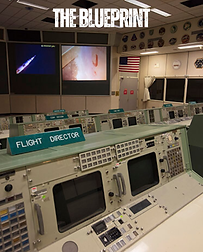
Mary Jackson (1921–2005)
Hampton, Virginia
- Mary Jackson, who held several jobs before landing at the NASA Langley Research Center as a human “computer,” became NASA’s first Black female engineer in 1958 after completing her degree in aerospace engineering.

Dr. Daniel Hale Williams (1856–1931)
Chicago, Illinois
- Dr. Daniel Hale Williams, who promoted the education and professionalization of Black Americans in medicine, performed the first successful open heart surgery, with the patient surviving to live another 20 years.

Bessie Coleman
(1892–1926)
Waxahachie, Texas, Chicago, Illinois, France
- Bessie Coleman, who learned to fly in France after being rejected from American flying schools based on her race and gender, became famous as a stunt plane flyer, traveling across the US and Europe.

Madam C.J. Walker
(1867–1919)
Indianapolis, Indiana & Harlem, New York
- Madam C.J. Walker, born Sarah Breedlove on a plantation in Louisiana where she grew up picking cotton, became a millionaire through her business selling hair products for African American women.

Jack Johnson (1878–1946)
Galveston, Texas
- Jack Johnson, who grew up in Galveston, Texas, became the first Black man to hold the Heavyweight title of the world in 1908.

Benjamin Montgomery (1819–1877)
Davis Bend, Mississippi
Benjamin Montgomery, who was enslaved on Hurricane Plantation (owned by Joseph E. Davis, the brother of Jefferson Davis), developed a boat propeller but could not receive a patent (despite Joseph Davis’s efforts to file one on his behalf) due to his status as a slave.

Oscar Micheaux
(1884–1951)
Metropolis, Illinois & New York City
- Oscar Micheaux, considered a pioneering filmmaker and the first African American to create a feature-length film, released The Homesteader, based on his novel of the same name, in 1917.